
Insurance technology partner to:












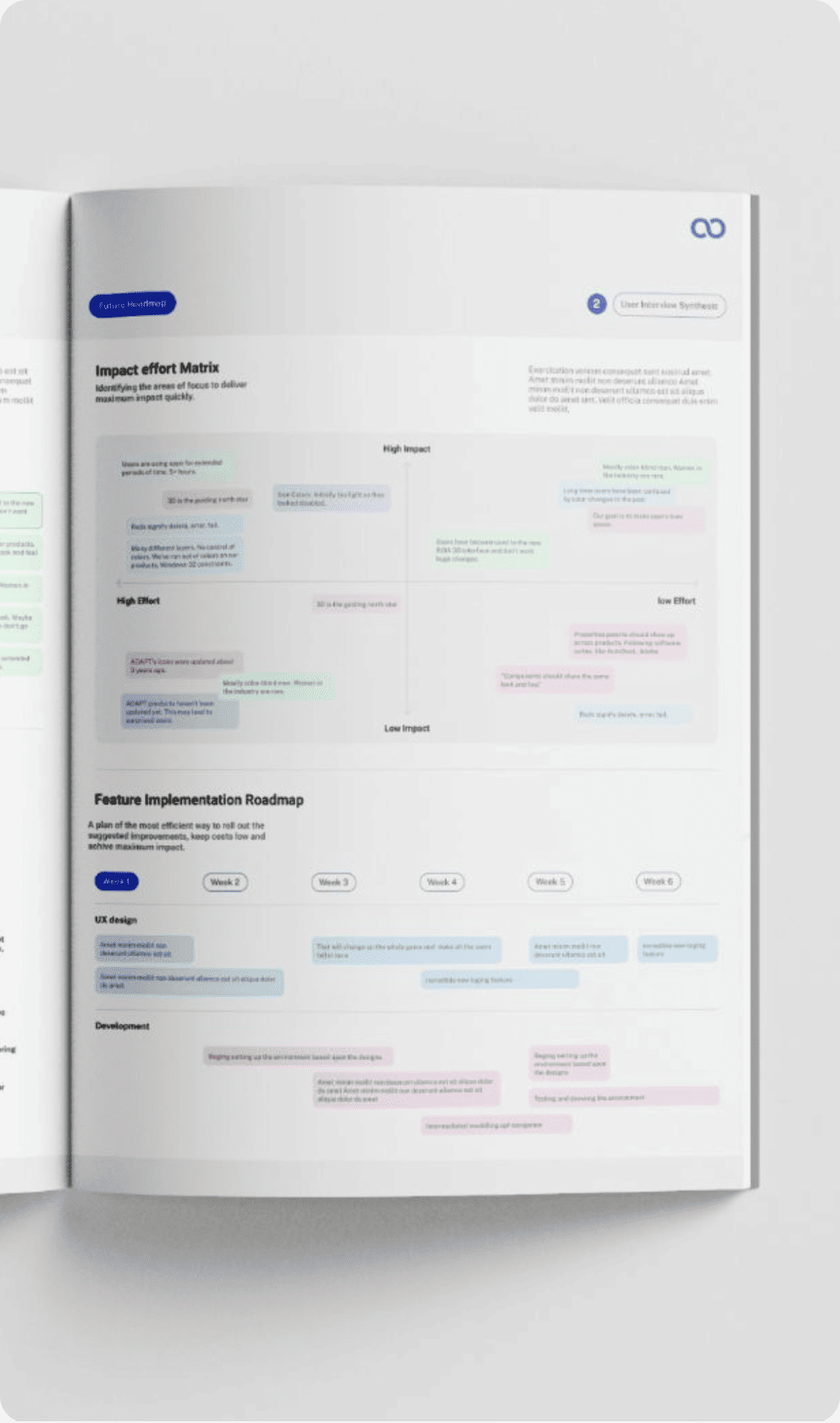
AI pathfinder delivers execution-ready plans
Productized assessment identifying best AI opportunities, quantifying impact, defining practical implementation roadmap.
We answer:
- Where are inefficiencies and bottlenecks?
- Which AI use cases create measurable value?
- What will it cost and save?
- What to build first—what to ignore?
- How to implement responsibly (data, governance, security, compliance)?
Who this is for:
-
CTOs CIOs Heads of Engineering - Heads of Product and Digital
- Operations leaders (process-heavy teams)
- Business unit leaders who want outcomes, not experiments
Especially useful if you have data and systems—but no clear AI adoption plan.
High-ROI AI use cases for insurance
Apply AI to the most difficult, costly challenges insurance carriers face. Identify highest-ROI opportunities in claims processing, underwriting, fraud detection, operations.
Claims document intelligence
AI reads, extracts, and summarizes claims documents at scale. ROI: 60–80% reduction in review time, up to 90% cost savings.
Outcome: Faster settlements and the ability to handle 2–3× claim volume with the same team.
Claims decisioning & adjudication
Automate triage, routing, and approval of routine claims. ROI: 40–60% lower processing costs, 30–50% faster cycle time.
Outcome: Straight-through processing for low-complexity claims and shorter settlement cycles.
Underwriting automation & risk scoring
AI-powered submission triage and risk scoring based on your loss history. ROI: 20–35% productivity increase, 5–12% loss ratio improvement.
Outcome: More quotes processed without increasing headcount or sacrificing discipline.
Fraud detection & investigations
Behavioral analytics and network graph models to detect organized fraud. ROI: 50–75% fewer false positives, 10–20% higher fraud detection.
Outcome: SIU teams focus on real fraud, preventing millions in annual losses.
Contract & policy intelligence
Extract terms, flag risks, and check compliance across policy documents. ROI: 60–75% time reduction, up to 10× more contracts analyzed.
Outcome: Increased underwriting capacity without expanding the team.
Regulatory & climate risk readiness
Explainable AI aligned with DoI, NAIC, and climate-adjusted pricing requirements. Impact: Reduced regulatory risk and faster rate approval cycles.
Outcome: Confident AI adoption that passes scrutiny and supports long-term pricing strategy.
Predictive claims analytics
Analyze claims patterns to predict outcomes, litigation risk, and reserve accuracy. ROI: Improved reserve accuracy and reduced litigation exposure.
Outcome: Smarter settlement strategies and more predictable loss performance.
Policy lifecycle & retention intelligence
Monitor renewals, flag lapse risks, and identify cross-sell opportunities. ROI: 5–15% improvement in retention, 10–25% lower acquisition cost.
Outcome: More premium retained without increasing marketing spend.
Customer communication automation
Automate routine inquiries, status updates, and coverage explanations. ROI: 40–50% reduction in service time, ~30% faster response.
Outcome: Better customer experience with lower service costs.
Insurance pathfinder process
Understand where your organization stands today in the market and how it performs operationally.
Clarify where the business is headed — and the roadmap it’s relying on to get there.
Analyze how work gets done, by whom, and how roles, workflows, and capabilities align with goals.
Identify what data exists, where it lives, how it flows, and what it enables (or restricts).
Assess the current technology stack that enables the business — from core systems to shadow IT.
Map out critical third-party dependencies and external relationships that impact delivery, data, or customer experience.
Built for real insurance environments
Systems we've integrated:
- Duck Creek
- Guidewire
- Insurity
- Majesco
- Applied Epic
- Vertafore
-
Salesforce Financial Services Cloud - Proprietary policy admin platforms
Regulatory & compliance experience
- State Department of Insurance compliance (50-state footprints)
- NAIC model laws and standards
- Rate filing processes and actuarial review
- Climate risk disclosure requirements
- Explainability standards for AI-driven underwriting
- Privacy regulations (state-specific and federal)
“The technology that DOOR3 has provided has increased our efficiency, provided a better customer experience and has helped us build a reputation within the Canadian insurance industry as the most innovative broker in the country.”Matt Alston, Co-Founder, Surex Direct
Proven AI results in insurance

Regional P&C carrier:
claims transformation
$8M annual claims processing costs, 45-day average settlement
- Identified claims triage, document intelligence, fraud detection
- Pilot Result: 60% cost reduction, 18-day average settlement, foundation for enterprise rollout

Specialty MGA:
underwriting modernization
$180M written premium, underwriting capacity constraining growth
- AI-powered submission triage + risk scoring integrated with proprietary system
- Result: 45% submission capacity increase, 6-hour quote turnaround, maintained discipline and loss ratios

Mid-market carrier:
fraud detection
$50M annual fraud losses, 95% false positive rate overwhelming SIU
- Behavioral analytics + network graph fraud detection
- Result: 70% false positive reduction, 15% fraud detection increase = $7.5M annual loss prevention
Why DOOR3?
Complete Advanced Technology Capabilities
Data, Machine Learning, Predictive Analytics, AI, RPA, IoT, Robotics, Quantum
Complete Advanced Data Capabilities
Data Strategy, Governance, Architecture, Integration, Management, Database Design, Development, Deployment
100% Subject Matter Expert Led
We bring empathy, collaboration, and shared purpose to all of our projects.
Global Availability
Globally deployed team available remotely and on prem
Strategic Technology Partnerships
Amazon, Microsoft, Google, Oracle, Databricks, Snowflake, D-Wave, Quantinuum, Pasqal
Strategy Design & Delivery
Co-design and co-delivery workshops for organizational, IT, AI, data strategy
Research & Development
"Lab on Demand" with short and long-term commitments


FAQ
How long does AI Pathfinder take?
Typically 3–6 weeks depending on scope and stakeholder availability. We align timelines during kickoff and keep a tight weekly cadence.
Do we need perfect data to start?
No. We start with what you have. Part of Pathfinder is assessing data readiness and defining pragmatic steps to close gaps while still delivering ROI.
Is this vendor/tool selection?
Pathfinder is vendor-agnostic. We evaluate build vs. buy, shortlist options when relevant, and recommend an implementation approach grounded in your constraints.
What industries?
Our insurance Pathfinder is optimized for P&C, Life, and Specialty lines. We also run Pathfinder programs in financial services, healthcare, logistics, and retail.
What happens after Pathfinder?
You receive an execution-ready roadmap. Many clients proceed directly into pilot build with DOOR3 or with their internal teams using our plan.
Request insurance pathfinder
30-minute confidential discussion with DOOR3’s insurance practice leadership.
Your operational priorities, current challenges, preliminary assessment of opportunities.
