What a Legal AI Agent Actually Does (and What Still Needs a Human)
08.12.2026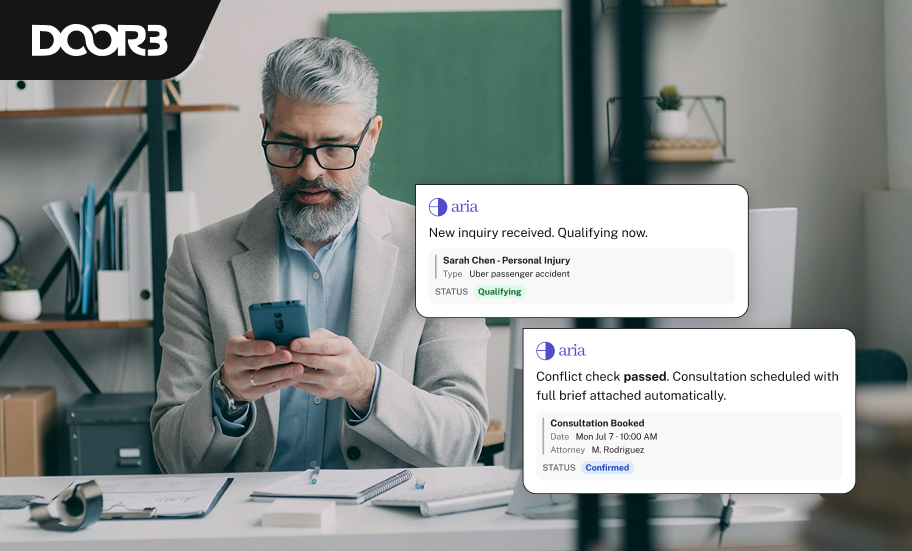
Key Takeaways
-
A legal AI agent takes multi-step action across your workflows. It drafts, retrieves, summarizes, and routes, unlike a chatbot that only answers or a search box that only finds.
-
The delegable tier covers document review, first-pass drafting, research and retrieval across your own knowledge, and matter intake and routing. This is where legal AI agents earn their keep today.
-
The judgment tier stays human. Strategy, client counsel, negotiation posture, ethical calls, and final sign-off belong to a lawyer who is accountable to the client and the court.
-
A simple delegation test sorts the two: weigh reversibility, review cost, and client exposure before you hand a task to an agent.
-
Guardrails make it trustworthy. Human-in-the-loop review, source citation, and access control over sensitive matter data are what separate a useful agent from a liability.
The firms getting real value are not the ones chasing the most automation. They are the ones drawing a clear line between what an agent handles and what a human owns. Here is how to draw it.
What people mean by "legal AI agent" (and what they usually get wrong)
A legal AI agent automates multi-step legal work such as document review, first-pass drafting, research retrieval across a firm's own knowledge, and matter intake and routing. It does not replace a lawyer. Strategy, client counsel, negotiation, ethical judgment, and final sign-off stay with a human who is accountable for the work. The firms that benefit most define clearly which tasks are delegated to the agent and which require senior judgment.
The confusion starts with the word "agent." Most tools marketed as legal AI are one of two simpler things. A chatbot answers a question and stops. A search box finds a document but does not act on it. Neither carries work forward.
A true agent takes a goal, breaks it into steps, and executes them: pull the precedent, extract the clauses, draft a first version, flag the exceptions, and route the result to the right attorney. The value, and the risk, both live in that ability to take action. An agent that can act saves real hours. It can also act wrongly at scale if you have not drawn boundaries around it.
What a legal AI agent actually does well today
Legal AI agents are strong at a specific tier of work: the delegable tier. These are tasks with clear inputs, a reviewable output, and a human on the other side to check the result.
Document review and first-pass drafting
This is the most mature use case. A legal AI agent reads long documents, extracts clauses, compares them against a standard, and produces a first draft or a redline for a lawyer to refine.
Clause extraction pulls indemnification, liability, or termination language out of a stack of contracts so an associate is not reading all of them line by line. Redlining marks where a counterparty's draft departs from your firm's playbook. Template assembly builds a first version from your own precedents, prefilled with the matter details.
The agent does not produce final work. It produces a strong first pass so senior time goes to the judgment calls, not the assembly.
Research and retrieval across a firm's own knowledge
The highest-value legal AI agents run on the firm's own corpus, not the open internet. They surface precedent, prior memos, closed-matter work product, and internal know-how that would otherwise sit undiscovered.
A firm's real competitive knowledge is what it has already done. An agent that can find the memo a partner wrote three years ago, or the deal structure that worked for a similar client, turns institutional memory into something usable on demand. The knowledge platform underneath the agent is what determines whether it is trustworthy or just fluent.
Intake, triage, and routing
Before a matter reaches the right person, someone has to classify it, gather the basics, and route it. A legal AI agent handles that front-door work: it reads an inbound request, classifies the matter type, assembles the intake, and moves it to the correct practice group or attorney.
This is unglamorous and high-leverage. It shortens the time between a client reaching out and a lawyer engaging, and keeps routing consistent.
What still needs a human: the judgment tier
Everything above is delegable because it is reviewable and reversible. The judgment tier is neither.
Strategy is a human call. Whether to litigate or settle, how to structure a deal, which argument to lead with: these depend on context, relationships, and risk tolerance an agent does not hold.
Client counsel is a human relationship. Clients are not paying for a summary. They pay for a trusted advisor who understands their business and their appetite for risk.
Negotiation posture is human. Reading the room and knowing when to hold and when to concede is judgment built over years.
Ethical calls are non-delegable. Conflicts, privilege, candor to the court, and duties to the client sit with a licensed attorney.
Final sign-off and accountability are human, always. When work goes to a client or a court, a lawyer's name is on it. The agent is a tool. The accountability is a person.
A legal AI agent is a tireless junior. It never replaces the partner who is answerable for the outcome.
How to tell the two apart in your own practice
You do not need a policy committee. Apply three questions to each task before you delegate it.
Is it reversible? If a mistake can be caught and corrected before it reaches a client or a court, it is a candidate for delegation. If a wrong answer causes harm that cannot be undone, keep it human.
What is the review cost? A good delegation saves more time than it costs to check. If verifying the output takes as long as doing the work yourself, you have not gained anything. First-pass drafts and clause extraction pass this test. Nuanced legal reasoning does not.
What is the client exposure? The more a task touches privileged information, client strategy, or the firm's standing, the more human control it needs. Low-exposure back-office work is safe to delegate early. High-exposure judgment work is not.
Delegate the reversible, low-cost-to-review, low-exposure work. Keep the rest.
Getting it right: guardrails that make a legal AI agent trustworthy
An agent without guardrails is a liability. Three controls separate a tool your firm trusts from one that creates risk.
Human-in-the-loop review. Nothing the agent produces reaches a client or a court without a lawyer's sign-off. The agent drafts. The human decides.
Source citation. Every claim the agent makes should trace back to a source a lawyer can open and verify. An agent that cannot show its work cannot be trusted with legal work, and citation is how you catch the confident-but-wrong output that language models are prone to.
Access control over sensitive matter data. The agent should only reach information a given user is entitled to see. Ethical walls, matter-level permissions, and client confidentiality are the baseline for putting any agent near legal data.
Build the guardrails first. An agent that is fast but unaccountable costs more than the hours it saves.
Where DOOR3 fits
A legal AI agent is only as good as the knowledge it runs on, which is why the platform underneath it matters more than the model on top.
DOOR3 has spent 24 years building enterprise software, and legal knowledge systems are a core part of that track record. For Cadwalader, DOOR3 built a law-firm knowledge platform that put the firm's own knowledge in reach of its people, the exact foundation a trustworthy legal AI agent depends on. We have delivered for AmLaw-200 firms, and we treat accountability and access control as baseline, not afterthoughts.
That experience is what ARIA, our legal AI agent, is built on. It runs on your firm's own knowledge, with the guardrails legal work requires. If you are scoping where an agent fits, the AI Pathfinder for legal is a practical starting point, and you can read more about our work across the legal industry.
The firms that win with legal AI are precise about the line between delegated work and human judgment. Draw it well, and the agent handles the volume so your seniors handle the calls that matter.




See how ARIA runs on your firm's own knowledge: explore the ARIA legal AI agent.
FAQs on Legal AI Agents
What is a legal AI agent?
A legal AI agent is software that takes multi-step action across legal workflows, such as reviewing documents, drafting first versions, retrieving research from a firm's own knowledge, and routing matters. Unlike a chatbot that only answers or a search box that only finds, it carries a task forward through several steps. It works best as a tireless junior handling delegable work under human review.
Can a legal AI agent replace a lawyer?
No. A legal AI agent handles delegable tasks like document review, first-pass drafting, and research retrieval, but strategy, client counsel, negotiation, ethical judgment, and final sign-off stay with a licensed attorney who is accountable to the client and the court. The agent produces the first pass so senior time goes to the work that actually needs judgment.
How do I know which legal tasks are safe to delegate to an AI agent?
Apply three tests. Is the task reversible, so a mistake can be caught before it reaches a client or court? Is the review cost low enough that checking the output saves time overall? Is client exposure low, meaning it does not touch privileged strategy or the firm's standing? Tasks that pass all three are good candidates for legal workflow automation. The rest stay human.
What guardrails does a legal AI agent need?
A trustworthy legal AI agent needs human-in-the-loop review so a lawyer signs off on any output that reaches a client or court, source citation so every claim traces to a verifiable source, and access control so the agent only reaches data a user is entitled to see. Without those controls, an agent creates more risk than value.
Should a legal AI agent use my firm's own knowledge or the open internet?
Your own knowledge. The highest-value AI agents for law firms run on the firm's internal corpus of precedents, memos, and closed-matter work product, not the open web. That is where your real competitive knowledge lives, and grounding the agent in it produces answers a lawyer can trust and verify.