









linkedin

DOOR3 provides AI services for law firms that need more than another standalone tool. We design, build, and integrate secure AI solutions across document review, legal research, intake, matter management, and firm operations. Our work connects AI with your existing systems, data, and review processes so attorneys can reduce repetitive work without giving up control of legal decisions.

AI solutions built around your law firm’s workflows

  • A structured assessment that identifies high-value AI opportunities, evaluates the firm’s workflows, systems, data, and governance, and produces a prioritized implementation roadmap.
  • ARIA is an agentic AI assistant that supports legal research, document analysis, drafting, intake, and client communication while integrating with the firm’s systems and review processes.

Legal workflow automation &
AI enablement

Accelerate legal operations by embedding AI into your most time-consuming processes:

  • Contract review, clause extraction, and smart templating
  • Document intake, routing, and matter lifecycle management
  • AI-assisted legal research and knowledge base lookup
  • Custom automations tailored to firm-specific workflows

AI-powered document
intelligence

Leverage LLMs to understand, summarize, and act on your document corpus:

  • Rapid drafting and redlining assistance
  • Risk flagging across contracts, NDAs, and briefs
  • Precedent-based suggestion engines for consistency
  • Built-in compliance with legal data governance standards

Legal ops dashboards
+ data products

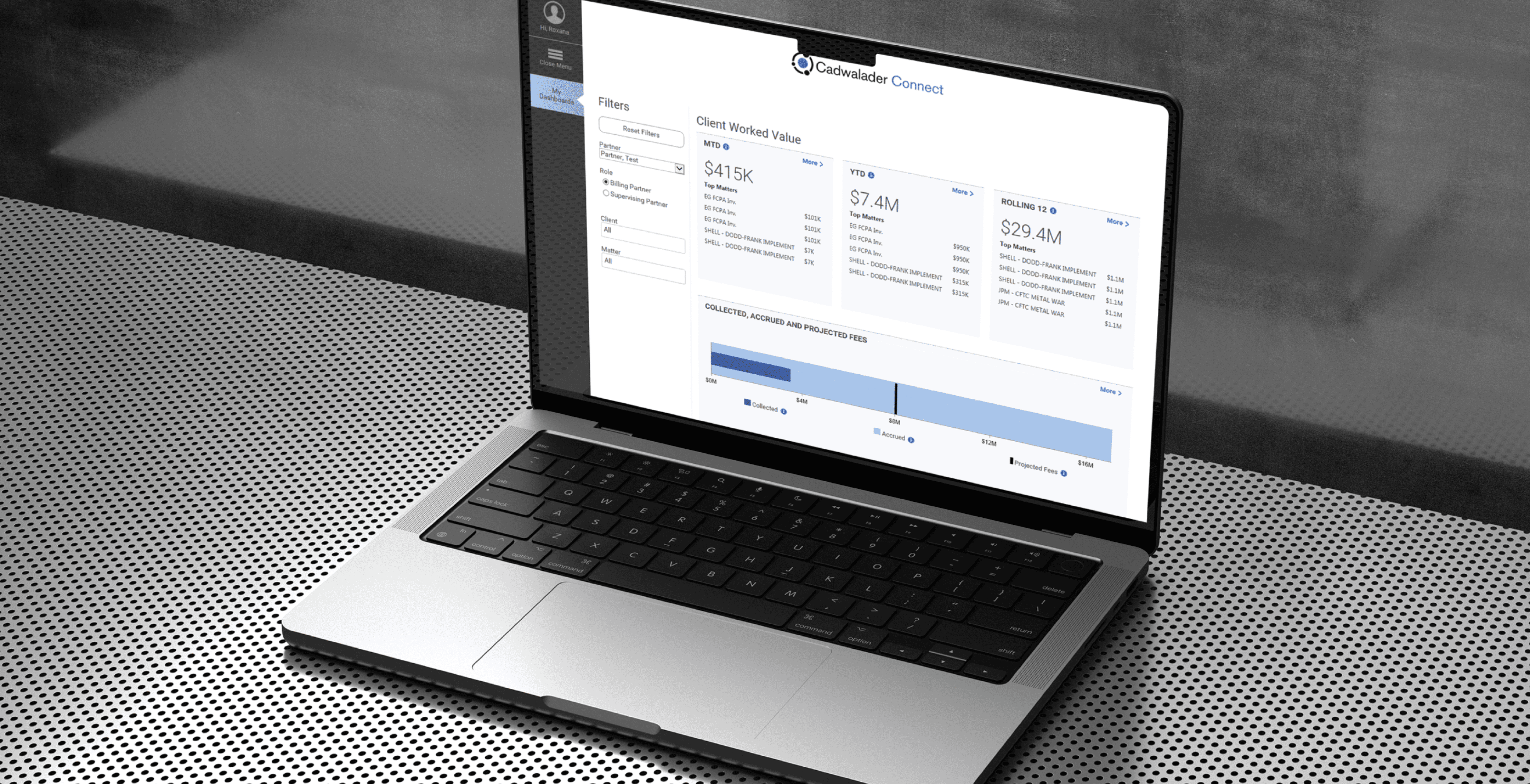
  • Real-time dashboards for caseloads, billing, and performance
  • Predictive resource planning and utilization tracking
  • Client- and matter-level KPIs for better decision-making
  • Integrations with existing DMS, time tracking, and finance tools

UX + system efficiency audits

  • Evaluate AI readiness across systems, workflows, and teams
  • Identify bottlenecks, poor user experiences, and low-leverage tasks
  • Prioritize automation and AI deployment for immediate ROI

Legal AI — from assessment to impact

AI opportunity assessment

A structured evaluation of the firm’s existing systems, workflows, and data maturity to identify high-impact AI opportunities. Includes a prioritized roadmap aligned with operational goals, timing, and risk appetite.

Deliverables: Executive summary, AI readiness analysis, and kickoff workshop.

Proof‑of‑value sprint

Rapid development of a targeted AI prototype (e.g., smart contract review, intelligent intake, or legal assistant interface) to validate impact before broader investment. Engagement is designed to demonstrate ROI and reduce uncertainty.

Deliverables: Functional prototype, measurement framework, and executive playback session.

Full AI legal platform build

End-to-end platform development — from opportunity discovery through deployment — of secure, scalable, and compliant AI-powered legal systems. Designed for seamless integration with existing infrastructure and long-term maintainability.

Deliverables: UX and technical architecture, full platform build, compliance alignment, and post-launch support.

UX + AI optimization audit (fast track)

Focused review of your firm’s current systems to uncover bottlenecks, missed automation opportunities, and low-effort, high-impact AI use cases. Ideal for teams seeking quick improvements without a full rebuild.

Deliverables: Audit report, prioritization matrix, and recommended implementation roadmap.

Trusted by industry leaders

  • logo
  • logo
  • logo
  • logo
  • logo
  • logo
  • logo
  • logo
  • logo
  • logo
  • logo
  • logo
  • logo

60% of attorney time goes to tasks that don't require a law degree.

AI changes that equation — without replacing the judgment that matters.

AI doesn't replace lawyers. It lets them practice law.

Applied legal AI scenarios

Real-world applications of AI across legal workflows — grounded in proven patterns from litigation, transactional, and legal operations environments.

Litigation Document Intelligence

Automated document review & eDiscovery

Accelerate large-scale document review without sacrificing accuracy.

AI reviews, classifies, and prioritizes thousands of documents for relevance, privilege, and confidentiality. Built-in redaction and risk detection reduce manual effort and review cycles across litigation and investigations.

Transactions AI + Automation

Contract analysis & due diligence

Move faster on transactions and contract-heavy work.

AI extracts key clauses, flags risks, and compares agreements against playbooks and standards. Legal teams review more contracts in less time while maintaining consistency across M&A, commercial, and vendor agreements.

Litigation Predictive Analytics

Legal research & litigation intelligence

Find relevant authority faster and build stronger strategies.

AI-assisted research surfaces cases, statutes, and precedents with contextual relevance. Pattern analysis across rulings, judges, and opposing counsel supports better-informed litigation and settlement decisions.

Legal Ops Workflow Automation

Legal operations & workflow automation

Reduce administrative overhead and improve firm-wide visibility.

AI automates intake, matter routing, conflict checking, and time capture while feeding real-time dashboards for caseloads, utilization, and billing. Legal teams spend less time on admin and more time on high-value work.

While your firm debates AI adoption, competitors are already winning deals with it. Here's what the competitive gap looks like — and how to close it.

Your most dangerous competitor isn't AI. It's another law firm using AI.

“Cadwalader Connect allows us to leverage powerful tools to efficiently manage our business, strengthen internal and external relationships, provide efficient access to data, and deliver exceptional legal services to our clients.”

Patrick Quinn, Managing Partner, Cadwalader

How we implement
AI in law firms

Our approach moves legal AI from a practical use case to a secure, working solution.

Phase 1

Assess workflows, systems, and data

We examine how work moves through the firm, where information lives, and which processes create delays or unnecessary effort.

Phase 2

Prioritize the right use cases

Opportunities are ranked by business value, technical feasibility, risk, and expected impact.

Phase 3

Validate with a proof of value

We build or configure a focused solution to test its performance before committing to wider implementation.

Phase 4

Integrate with the legal technology stack

The solution is connected to relevant document, matter management, billing, and knowledge systems.

Phase 5

Test security and human controls

We evaluate accuracy, data protection, access controls, auditability, and attorney-review requirements.

Phase 6

Deploy and improve

After launch, we train users, monitor performance, and refine the solution as the firm’s needs evolve.

Security, confidentiality, and responsible legal AI

Legal AI must protect client information without weakening the controls law firms already rely on. DOOR3 builds security and governance into the solution architecture, data flows, and review process from the beginning.

Defined data boundaries

Clear rules for where information is processed, stored, retained, and whether it can be used to train external models.

Controlled access

Role-based permissions limit sensitive matter data to authorized users and systems.

Grounded outputs

AI responses can be tied to approved legal sources, firm knowledge, and underlying documents for easier verification.

Human oversight

Attorneys review AI-assisted drafts, research, recommendations, and client-facing communications before they are used.

Auditability

Logging and version histories help firms trace inputs, outputs, approvals, and system activity.

Ongoing governance

Performance, security, and accuracy are monitored as workflows, models, and professional obligations evolve.

“The fastest-growing firms nearly doubled revenue over four years while growing their client base by only 50%. They didn't hire. They automated.”


— Clio 2025 Legal Trends Report

Scale your legal caseload, not your headcount.

Why law firms choose DOOR3

DOOR3 combines legal workflow expertise, AI strategy, and technical delivery to build solutions that work within a firm’s existing operations.

Legal technology experience

We understand how legal work moves across document, matter management, billing, knowledge, and eDiscovery systems.

Strategy through implementation

The same team can assess opportunities, define the roadmap, build the solution, and support deployment.

Vendor-independent guidance

Recommendations reflect the firm’s workflows, data, risk requirements, and business goals.

Connected solutions

We integrate AI with the firm’s existing technology to create a coordinated legal workflow.

Principal-led delivery

Senior experts remain involved throughout the engagement and key technical decisions.

Governance by design

Data controls, human review, and accountability are built into the workflow from the beginning.

Production-focused support

DOOR3 helps move solutions from an initial prototype to a secure, maintainable production environment.

DOOR3 team member presenting a workflow plan on a whiteboard

FAQ

What AI services does DOOR3 provide for law firms?

DOOR3 provides AI strategy, opportunity assessment, workflow automation, custom AI development, systems integration, governance, and implementation support for law firms. Engagements can cover document review, legal research, intake, knowledge management, matter pricing, reporting, and other operational workflows. The service can begin with a focused proof of value and continue through production deployment, user training, monitoring, and optimization.

How can AI be integrated with our existing legal software?

AI can connect with document management, matter management, billing, CRM, eDiscovery, contract lifecycle, and knowledge systems through APIs, connectors, or a custom integration layer. DOOR3 maps how data moves between platforms, defines access permissions, and embeds AI into existing review steps. This allows attorneys and staff to use new capabilities within familiar tools and established workflows.

Should our law firm build or buy an AI solution?

The right choice depends on workflow complexity, available products, integration requirements, data sensitivity, and long-term ownership goals. An existing platform may suit common tasks such as research or contract review. Custom development makes more sense when the firm needs proprietary workflows, specialized data access, or deeper system integration. DOOR3 evaluates build, buy, and hybrid options before recommending an approach.

How do you protect confidential and privileged information?

We map where client and matter data is stored, processed, transmitted, and retained before implementation begins. Security measures can include restricted model access, role-based permissions, encryption, private deployment, retention controls, audit logs, and vendor data-use restrictions. Human review and documented approval steps help preserve professional accountability when AI-generated material contributes to legal work or client communication.

How long does a legal AI implementation take?

Timelines depend on scope, data readiness, integration complexity, security requirements, and the number of workflows involved. A focused assessment or proof of value may take several weeks, while a production system with multiple integrations can require several months. DOOR3 defines milestones, dependencies, testing requirements, and success measures at the start of the engagement to establish a realistic delivery plan.

Which law firm workflows should be automated first?

Begin with repetitive, high-volume work that follows clear rules and allows attorney review. Strong candidates often include document intake, classification, contract clause extraction, knowledge retrieval, billing support, matter routing, and standard document drafting. Each opportunity should be assessed for expected value, data availability, implementation effort, risk, and the amount of professional judgment required.

How do you measure the ROI of legal AI?

ROI should be measured against the firm’s existing baseline. Useful metrics include time per task, turnaround time, cost per matter, review volume, error or rework rates, utilization, adoption, and client response time. DOOR3 defines these measures before implementation and compares performance after deployment, allowing the firm to evaluate financial impact, operational improvement, and scalability.

Does a lawyer review AI-generated output?

Yes. Attorneys should review AI-assisted research, drafts, recommendations, and client-facing content whenever the work requires legal judgment or professional accountability. The workflow should define which outputs require approval, who performs the review, and how that decision is recorded. Lower-risk administrative tasks can use proportionate controls, while legal conclusions and final deliverables remain subject to qualified human oversight.

Wide image
Door3.com